Connect what already exists
GIS, asset records, failures, work orders, pressure and flow, acoustic sensors, weather, soil, topography and water-quality data.
Use existing asset, operational, environmental and sensor data to identify higher-risk assets, detect leaks earlier, assess sewer condition and support water quality operations.
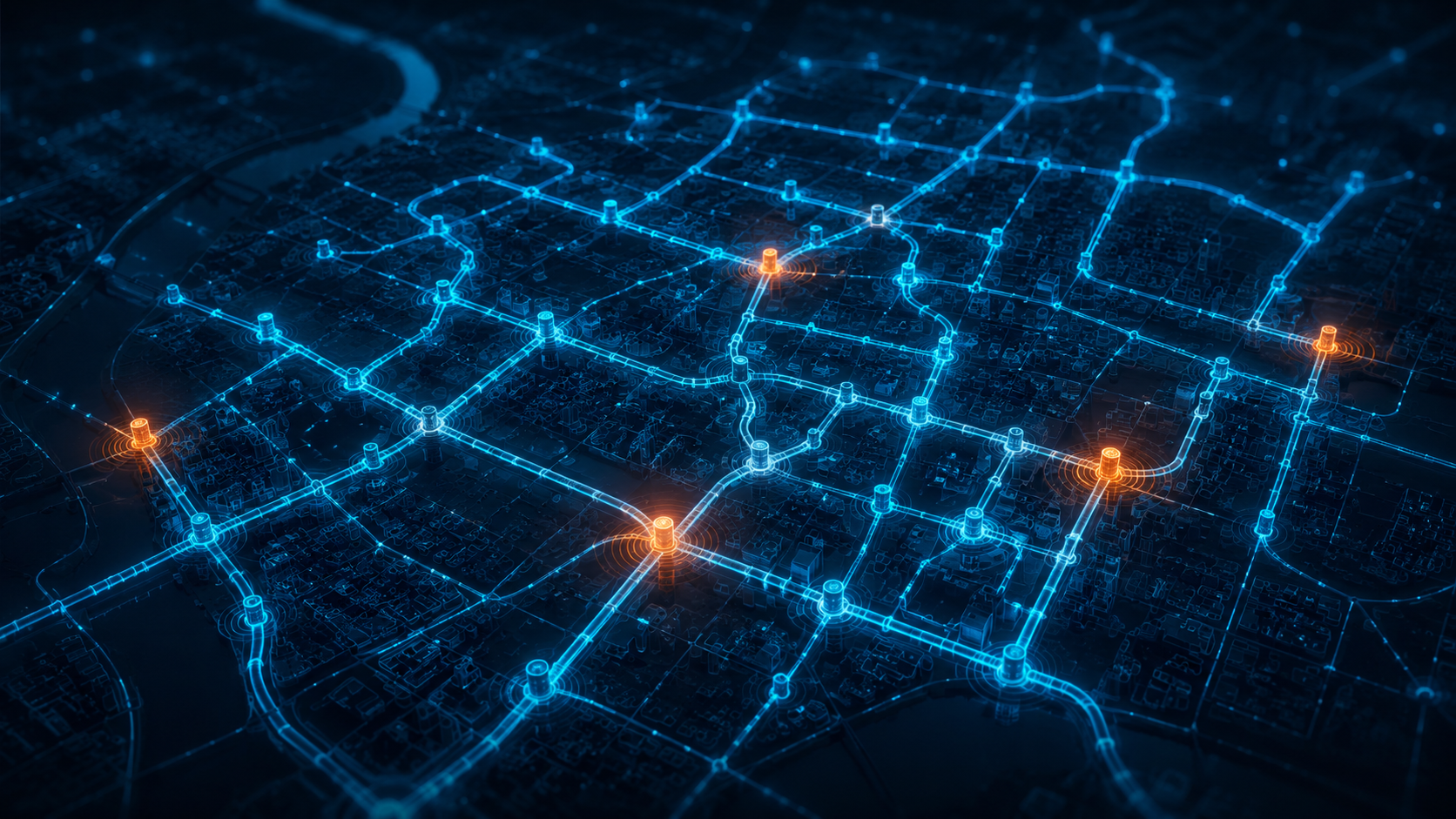
Tap or hover over a result to see the validation context recorded in the project material.
Prioritise a smaller part of the network while capturing most observed failures.
Quarterly validation against actual failuresNarrow the search area before inspection or sensor deployment.
Prediction compared with actual locationsField deployment translated detection into measurable water-loss reduction.
Greater Sydney operational programmeMulti-day raw-water forecasting across normal and extreme conditions.
Validated in NSW and VictoriaWater utilities already collect GIS, asset, failure, pressure, flow, sensor, weather, and water quality data. The challenge is turning these separate datasets into a clear view of where attention is needed first.
The work has been evaluated against actual failures, field investigations, sensor results and operational water-quality observations. The aim is not simply to produce a score, but to narrow the search area and support practical decisions under limited inspection and maintenance budgets.
Review asset risk, anomalies, trends, key factors, and field findings in one place, with a common evidence base for engineering and operational teams.
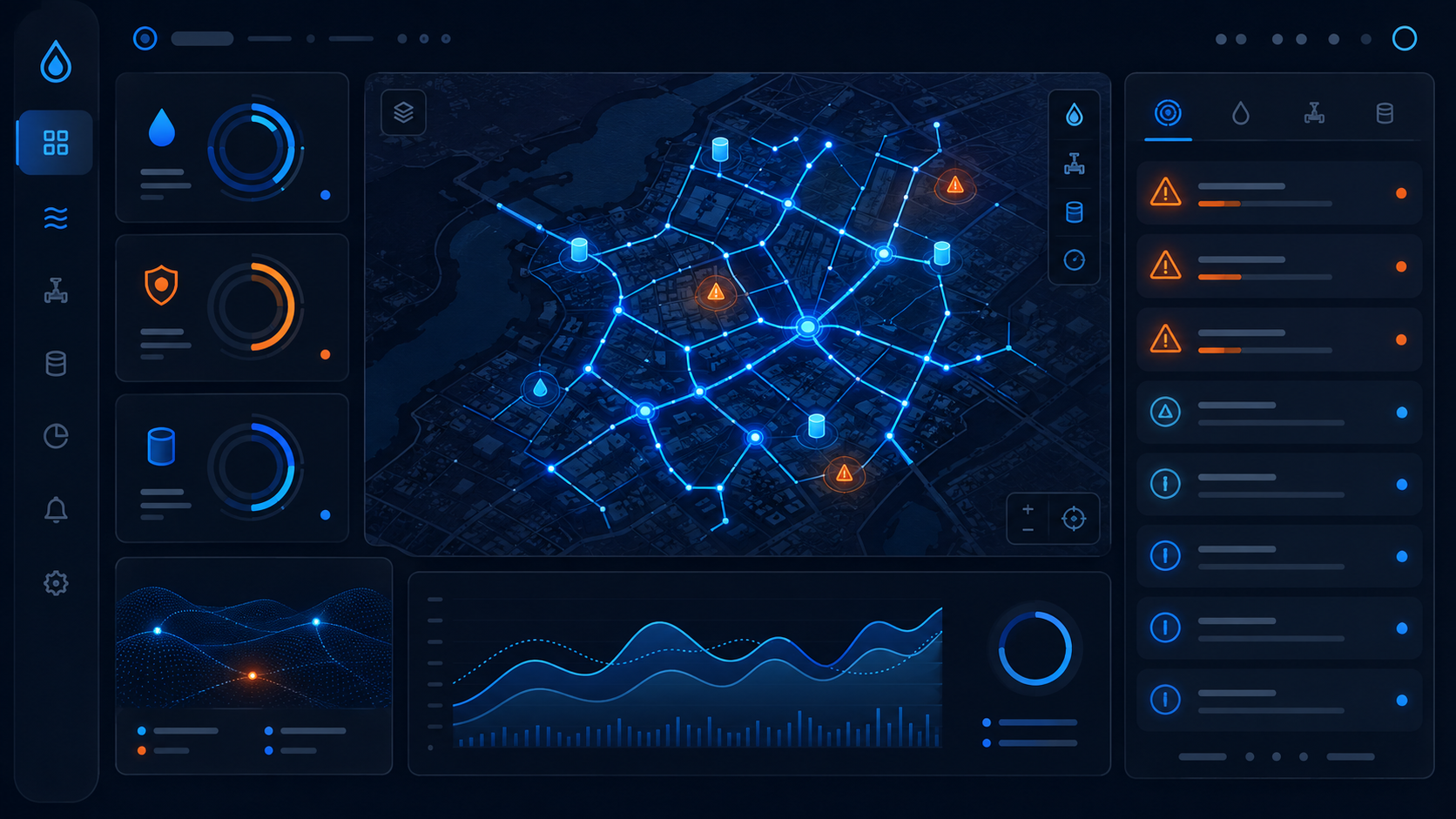

GIS, asset records, failures, work orders, pressure and flow, acoustic sensors, weather, soil, topography and water-quality data.
Use task-appropriate spatial, time-series, survival, anomaly and risk models to rank assets or forecast conditions.
Support inspection, sensor placement, planned maintenance, renewal, dosing and operational scenario assessment.
Use actual failures, inspections, repairs, sensor findings and water-quality observations to review and update the analysis.

Using 20 years of historical data, pipe risk analysis, and acoustic monitoring, 270 sensors were deployed in priority areas. Sensor data, asset records, risk scores, and field investigations were brought together in a single operational view.
The acoustic sensing and analytics approach was progressively field-tested and incorporated into Sydney Water's business-as-usual monitoring and maintenance processes.
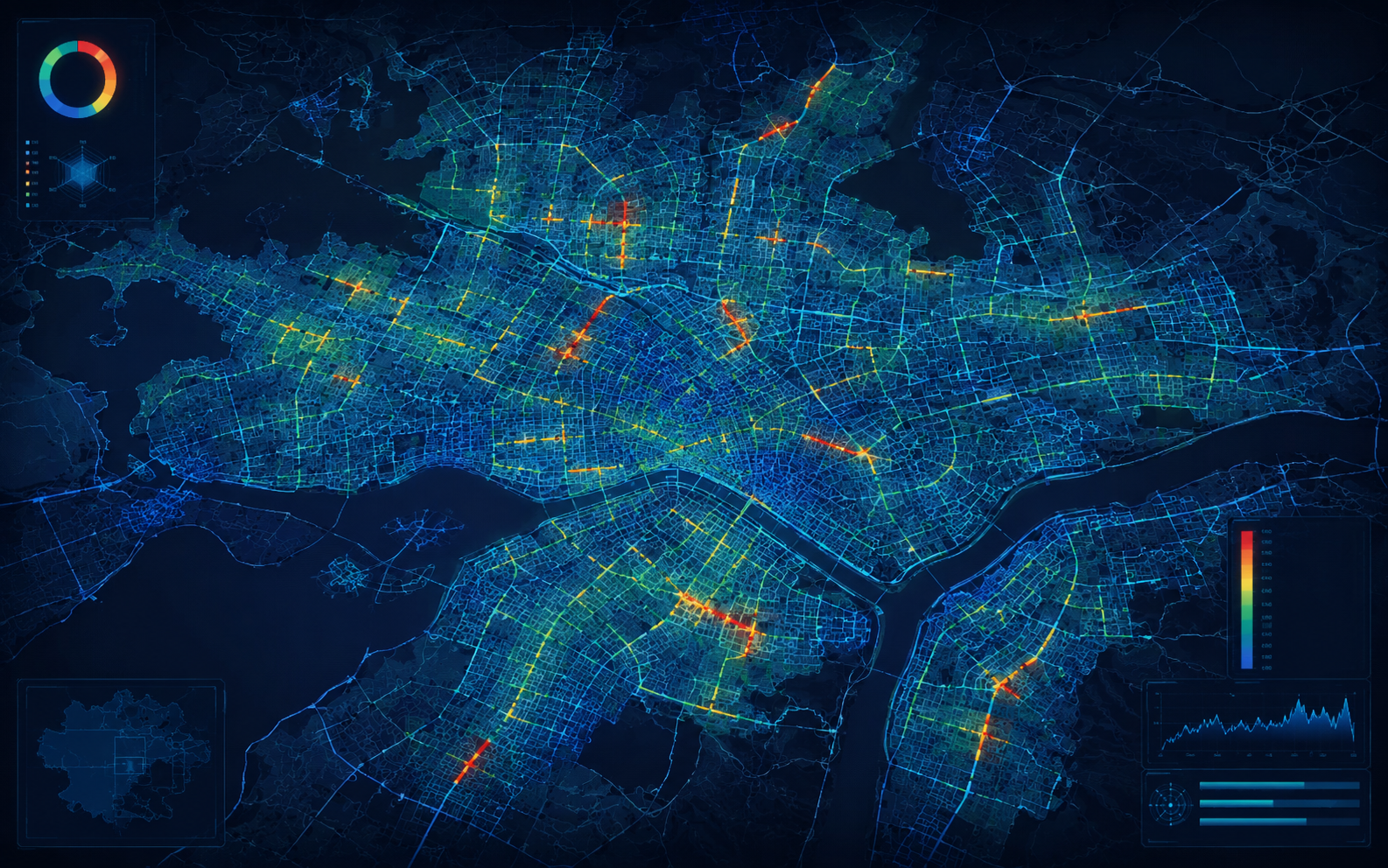
Use asset, environmental, historical, and operational data to estimate pipe-level risk and support inspection, maintenance, and renewal prioritisation.
Validated every three months against actual failures · ~30 utilities · 9 million pipes · 525,000 km of network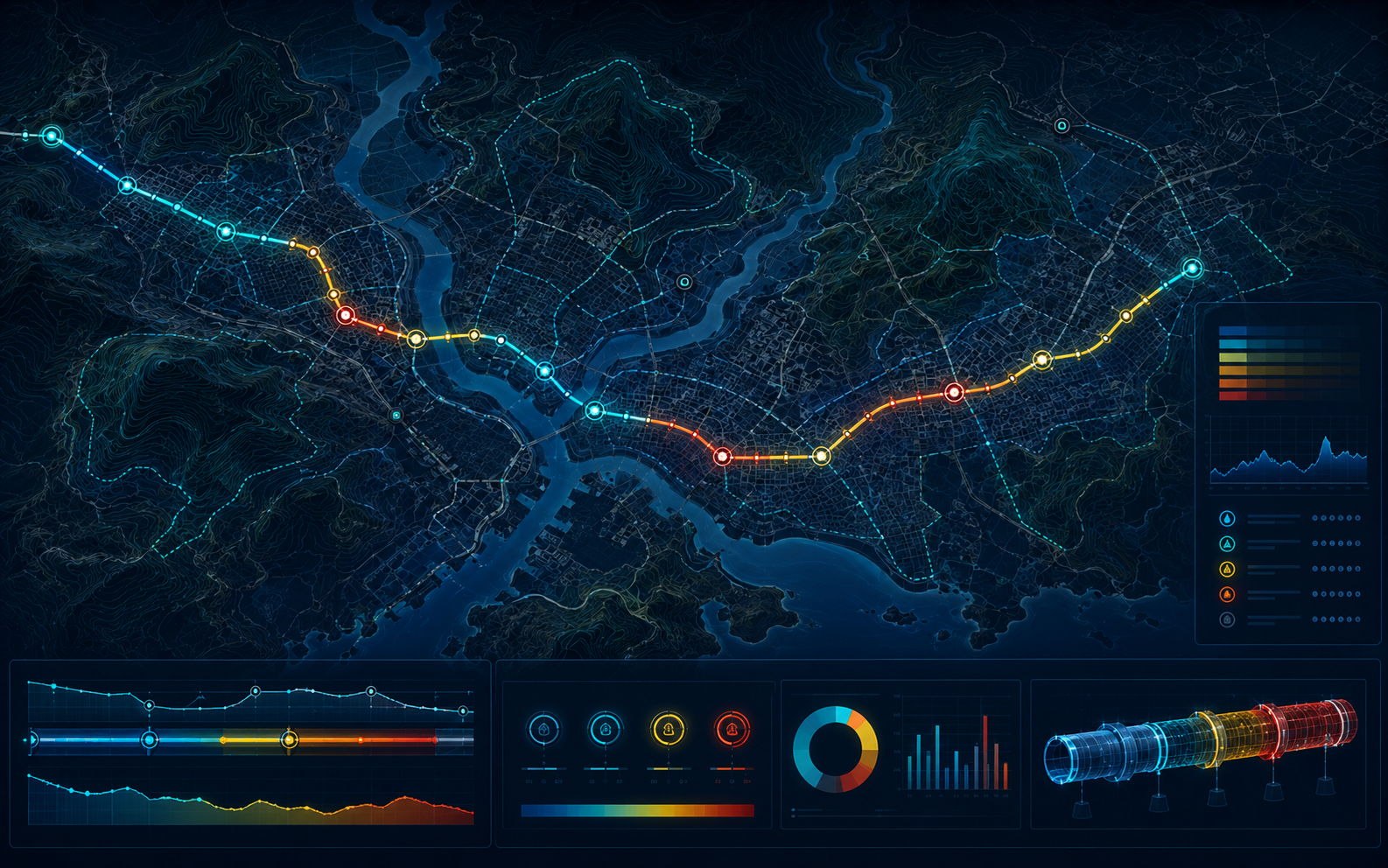
Use pipe, soil, topography, waterway, flow, and chemical dosing data to assess likely failure risk and failure type.
Model trained and validated using 200+ historical failures · project material estimates failure reduction up to 30% initially and 50% over three years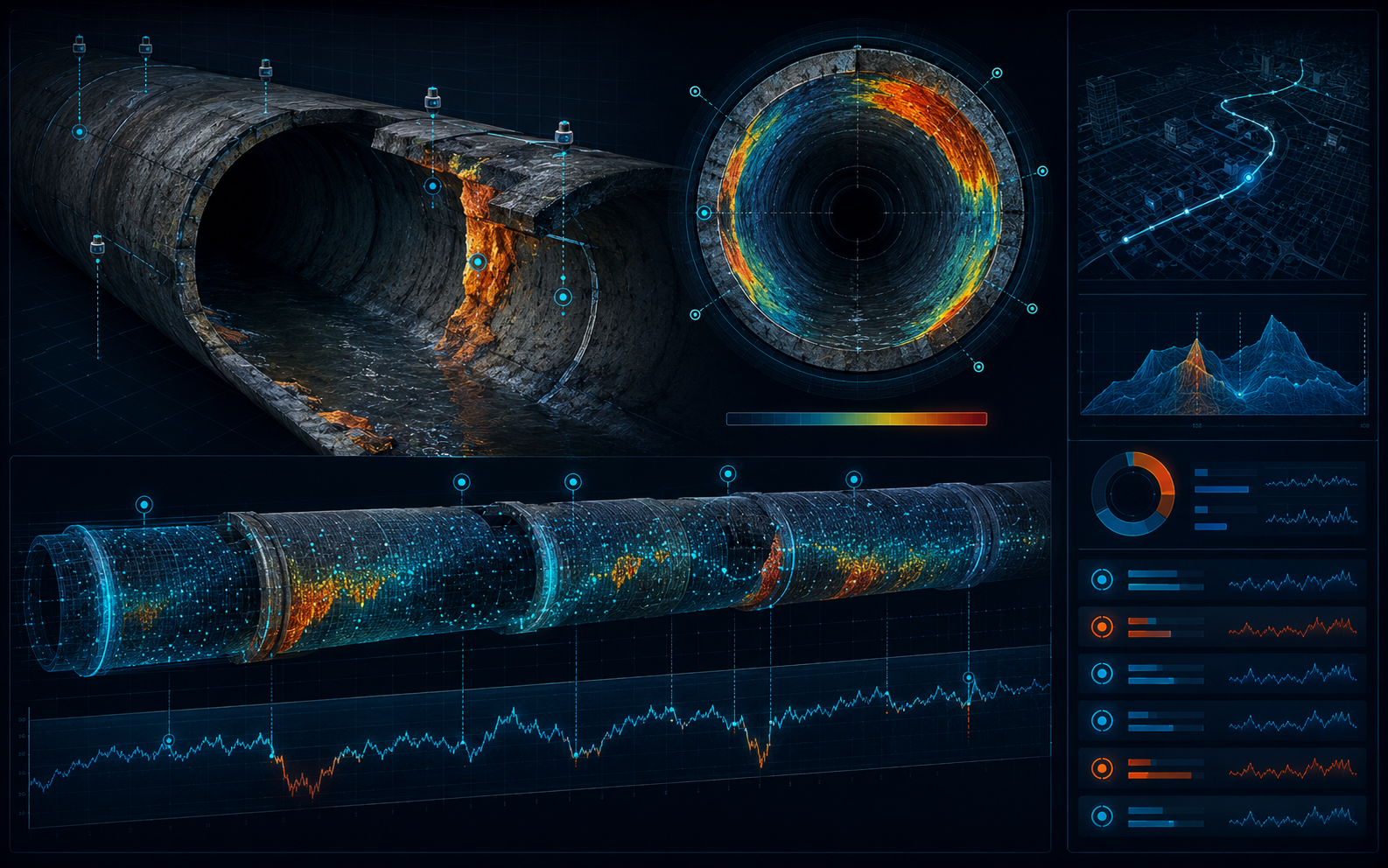
Combine sensing, microbial data, condition information, and predictive modelling to estimate corrosion progression and remaining service life.
Prediction linked with in-situ sensing, smart coupons and physical condition evidence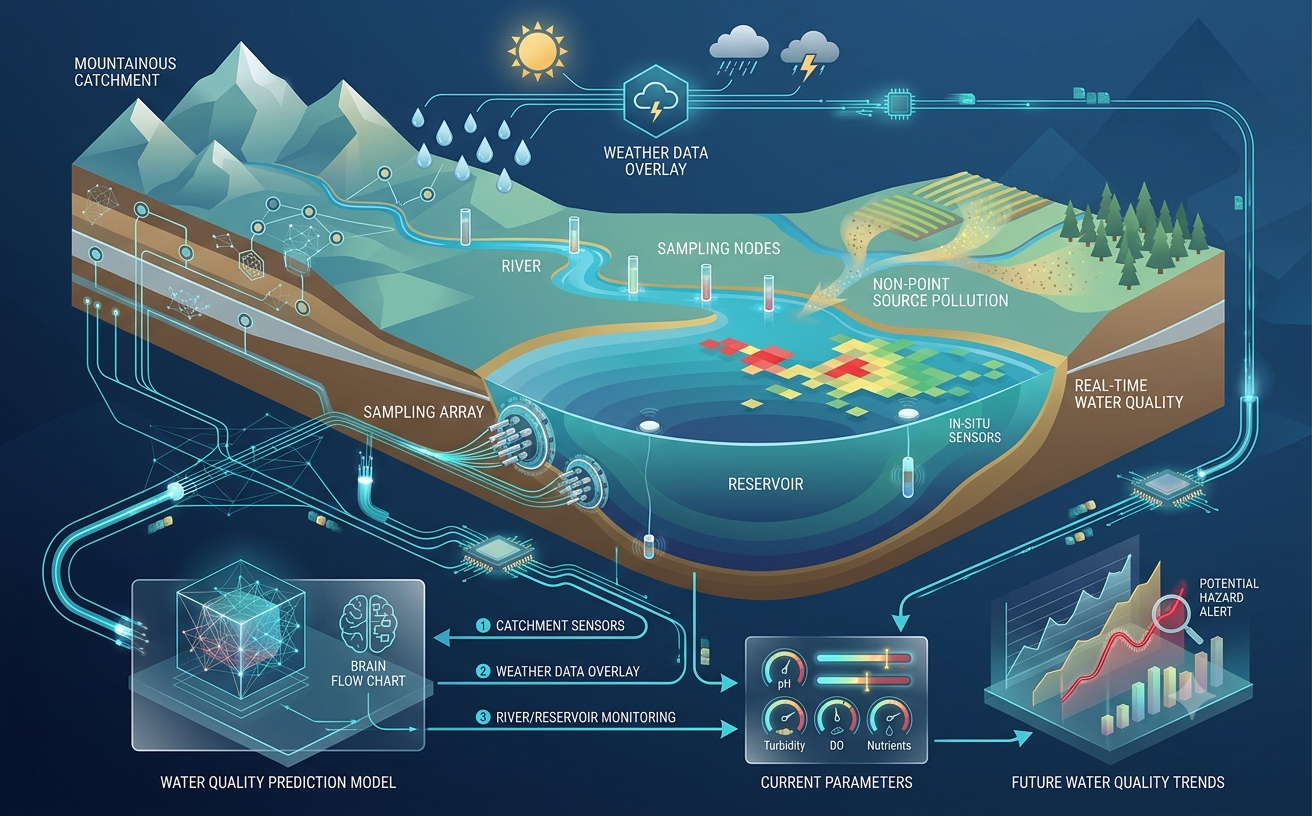
Use upstream water quality and historical and forecast weather data to provide multi-day forecasts for treatment planning.
Validated across NSW and Victorian catchments · project material states the software is used in business-as-usual operations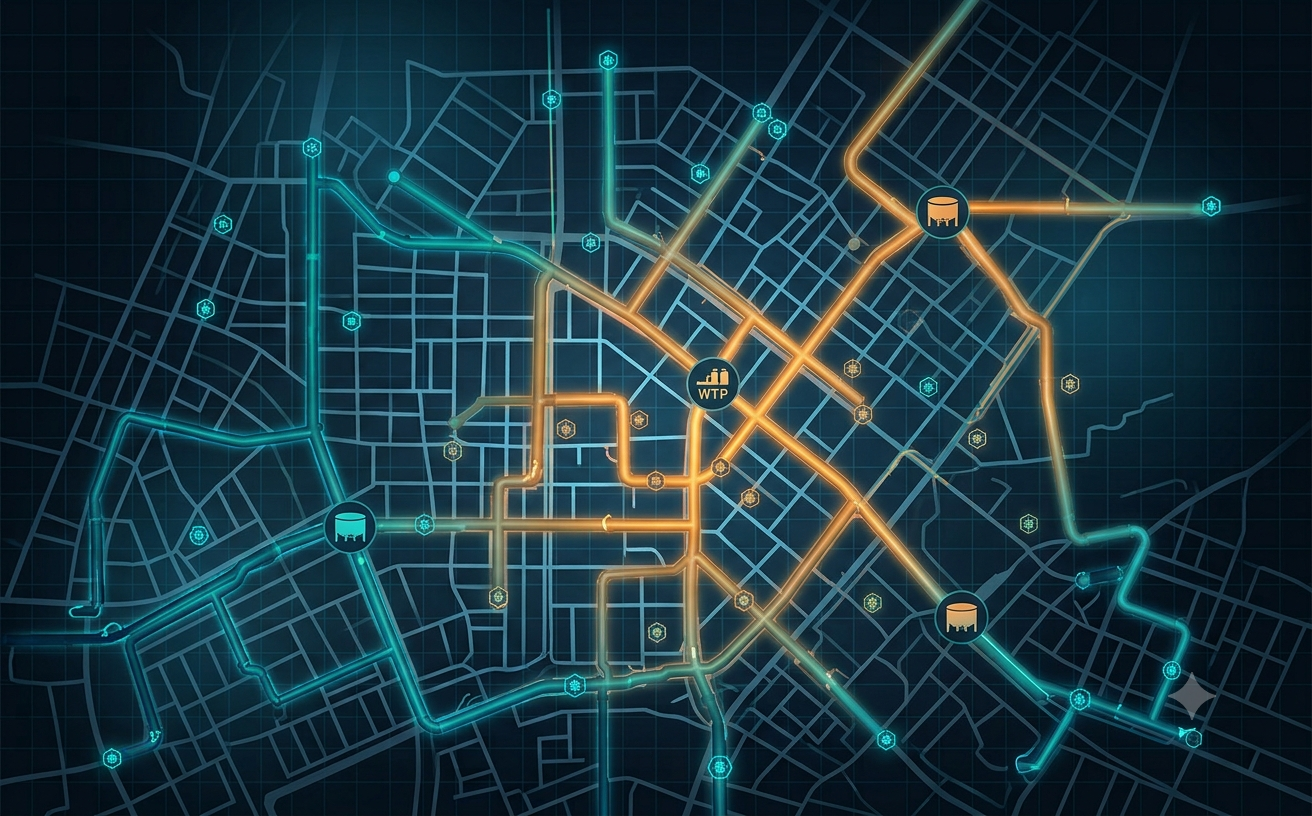
Predict water age, total chlorine, and key operating conditions, with GIS-based views to support daily operations and scenario assessment.
Supports daily or hourly operational adjustment, chlorine dosing and what-if scenario assessment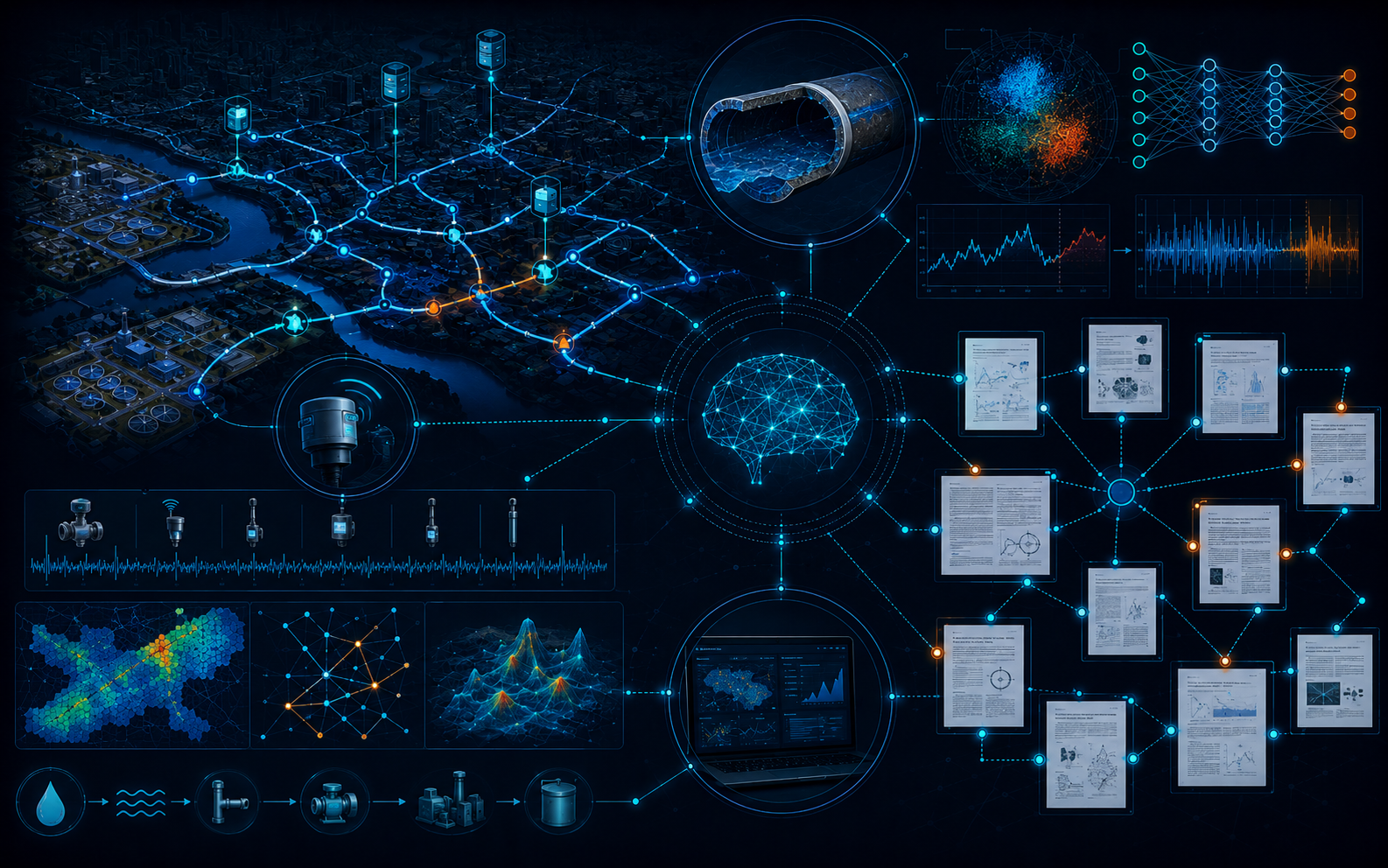
Research and applied work spanning predictive maintenance, failure modelling, anomaly detection, water quality, sensing, and visual analytics.
Built through long-term research and industry collaborationWater infrastructure research spanning failure prediction, leak detection, sewer condition, and water quality from 2015 to 2025.
A. Mohiuddin, Y. Wang, H. Tian, Y. Wang, B. Blayney
Ozwater'25B. Stephen, M. Kacprzak, B. Li, T. Guo, Y. Wang, V. Viswanathan, S. Kodagoda, K. Thiyagarajan, D. Vitanage
OzWater'23J. Xu, D. Vitanage, M. Kacprzak, I. Chowdhury, M. Valix, D. Fletcher, T. Guo, J. V. Miro, D. Gamini, Y. Wang
OzWater'22S. Liang, Z. Li, B. Liang, Y. Ding, Y. Wang, F. Chen
CIKM 2021B. Liang, J. Xu, Z. Li, S. Liang, Y. Wang, F. Chen, D. Vitanage, R. Nikoloska
OzWater'21R. Nikoloska, D. Vitanage, L. Bykerk, J. V. Miro, B. Liang, J. Xu, Y. Wang
OzWater'21B. Liang, S. Verma, J. Xu, S. Liang, Z. Li, Y. Wang, F. Chen
ICARCV 2020B. Liang, Z. Li, R. Taib, G. Mathews, Y. Wang, S. Lu, F. Chen, T. Hua, R. Ius, A. Peters, D. Vitanage, C. Doolan
ICDM 2019Machine learning prediction to improve operational resilience in managing disinfection for Macarthur Water Supply System. Ozwater'23.
Water Quality Prediction in a Chloraminated System for Drought Resilience. Ozwater'21.
Long-Term Pipeline Failure Prediction Using Nonparametric Survival Analysis. ECML PKDD 2020.
Data-Driven Water Quality Prediction in Chloraminated Systems. Water e-Journal.
Utilizing machine learning to prevent water main breaks by understanding pipeline failure drivers. Ozwater'19.
Domain Knowledge in Predictive Maintenance for Water Pipe Failures. Springer.
Long-Term RNN: Predicting Hazard Function for Proactive Maintenance of Water Mains. CIKM 2018.
Corrosion Prediction on Sewer Networks with Sparse Monitoring Sites: A Case Study. PAKDD 2018.
Predictive analytics toolkit for H2S estimation and sewer corrosion. OzWater 2017.
Improved Data-Driven Reticulation Watermain Failure Prediction. OzWater 2016.
Prioritising Water Pipes for Condition Assessment with Data Analytics. OzWater 2015.
Data Driven Water Pipe Failure Prediction: A Bayesian Nonparametric Approach. CIKM 2015.
Several solutions have been trialled or adopted in routine monitoring, maintenance, and operational workflows, with recognition from water industry and technology awards.
Smart Water Infrastructure brings together applied research and industry work across asset failure prediction, leak detection, sewer condition, and water quality management.
The focus is on using existing utility data, validating results against field evidence, and turning analysis into practical support for inspection, maintenance, renewal, and operations.
For industry collaboration, pilot studies, applied research, or technology translation, please contact: